 Save
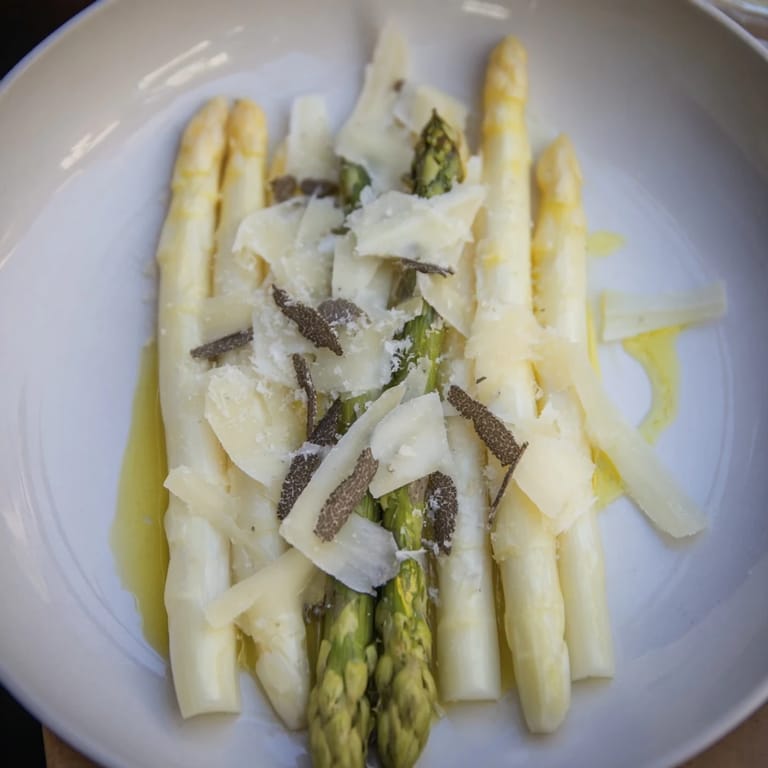
Save The first time I served white asparagus, I was convinced it would taste like watered-down spring until the moment it touched my tongue—clean, delicate, almost sweet. That dish taught me that sometimes the simplest ingredients need nothing more than respect and restraint, which is exactly what The Silver Birch is about. When I learned to pair it with burrata and truffle, the whole plate suddenly felt like edible silk, something that made guests pause mid-conversation. It's become my go-to when I want to impress without fussing endlessly in the kitchen.
I remember plating this for a dinner party on a quiet autumn evening, and one guest actually set down her fork between bites just to admire it. That moment made me realize this dish does something rare—it feels intentional and refined without trying too hard, which is when food becomes memorable. It's the kind of starter that sets a tone, tells people you've thought about what they're about to experience.
Ingredients
- White asparagus, 500 g trimmed and peeled: Milder and more delicate than green asparagus, it needs just enough cooking to become silky without turning mushy—that ice bath is your insurance policy.
- Burrata or buffalo mozzarella, 75 g drained: The creamy heart makes everything around it feel softer and more luxurious; make sure it's cold and let it rest at room temperature for just two minutes before serving so it opens up.
- Aged Comté cheese, 75 g thinly shaved: This one brings subtle nuttiness and a texture that shatters a little when you bite it, balancing the softness of the cheese below.
- Parmigiano-Reggiano, 50 g finely grated: A small amount of this aged powerhouse adds depth without dominating, so use the microplane and don't skip it.
- Fresh black truffle, 15 g or 1–2 tbsp truffle paste: If you can find fresh truffle, it's worth it for the earthy aroma alone, but good truffle paste works beautifully too—just use a light hand.
- Extra-virgin olive oil, 2 tbsp: This is a dressing ingredient, so quality matters; a buttery or peppery oil can change the whole mood of the plate.
- Fresh lemon juice, 1 tbsp: The acid keeps everything bright and prevents the cheese from feeling heavy; fresh-squeezed makes a noticeable difference.
- Flaky sea salt and white pepper: White pepper preserves the pale, elegant look of the dish while adding bite without visual distraction.
Tired of Takeout? 🥡
Get 10 meals you can make faster than delivery arrives. Seriously.
One email. No spam. Unsubscribe anytime.
Instructions
- Poach the asparagus gently:
- Bring salted water to a bare simmer—not a rolling boil, which can bruise these delicate spears. After 8–10 minutes, they should bend slightly but snap with a small resistance. Plunge them immediately into ice water to stop cooking; this keeps them firm and bright.
- Arrange on the plate:
- Slice each asparagus spear lengthwise and lay them in parallel lines on cold plates, creating a clean foundation. The coldness matters because warm plates will start sweating the cheeses.
- Layer with cheeses:
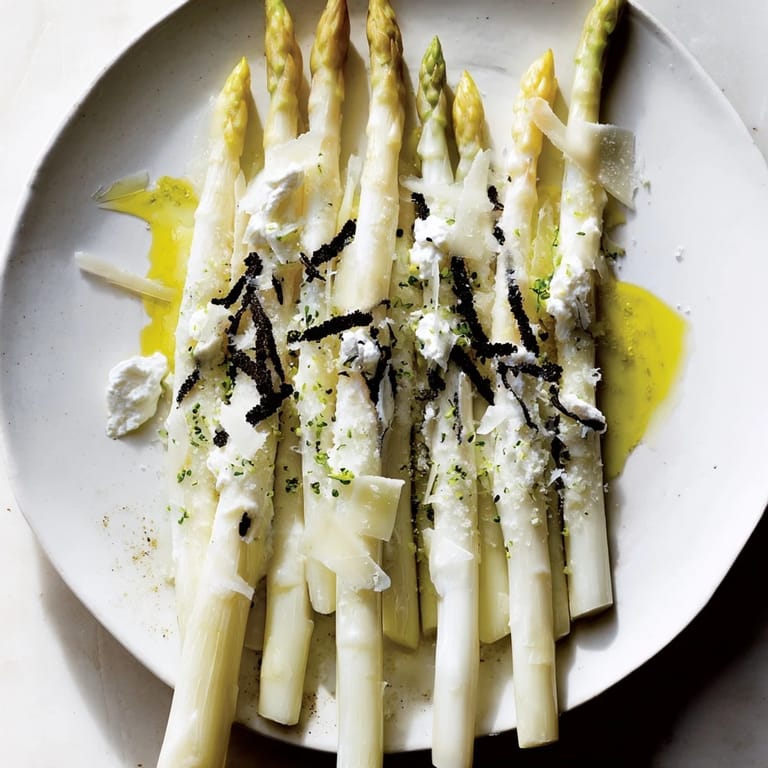
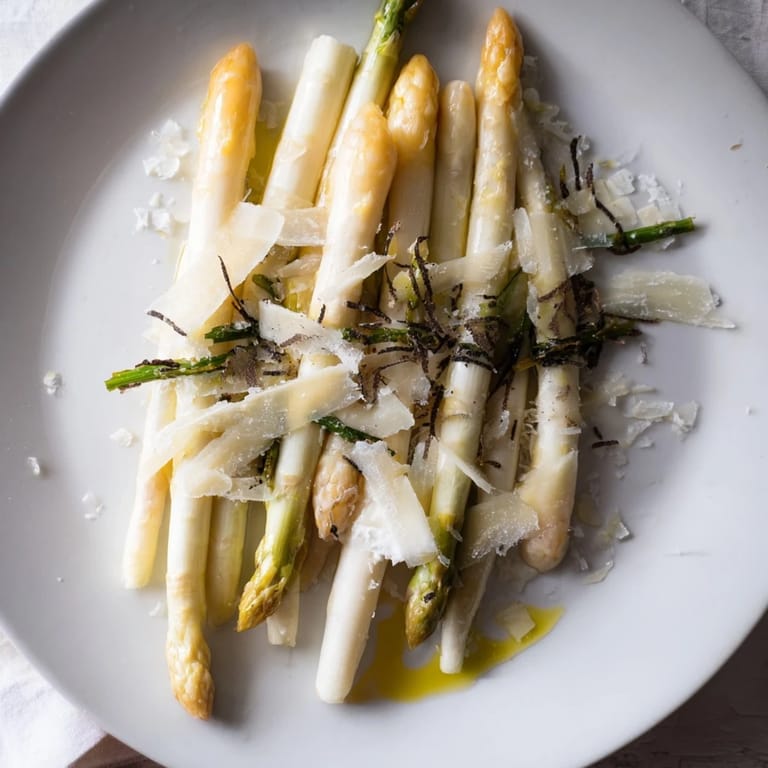
- Tear burrata into 5–6 pieces per plate and scatter them over the asparagus. Add Comté shavings while the plates are still cold—they'll hold their shape better. Finish with a light snow of Parmigiano-Reggiano.
- Add truffle:
- If using fresh truffle, work slowly with a truffle slicer or vegetable peeler to create thin, elegant stripes that catch the light. If using paste, thin it slightly with a drop of warm water and drizzle in fine lines using a spoon or squeeze bottle.
- Dress and finish:
- Whisk oil, lemon juice, salt, and pepper together quickly so they stay emulsified. Drizzle this dressing in a thin, even pattern over the whole plate. Add microgreens or chervil just before serving for a final flourish of color.
 Save
Save I learned the power of this dish during a quiet lunch with my mother, who'd mentioned wanting something special but not heavy. When she tasted it, she said it was like eating something that didn't need to prove itself, and I understood then that true elegance is about knowing when to stop. It became the dish I turn to when I want to say something without words.
Why White Asparagus Matters
White asparagus never gets the attention of its green cousin, but it has a quieter sophistication—sweeter, more delicate, with a texture closer to butter. It grows underground, never seeing sunlight, which is why it stays pale and tastes so mild. Once you've cooked it properly, you understand why it's prized in European kitchens; it's the kind of ingredient that makes you slow down and pay attention.
Building Flavors with Cheese
Cheese works in layers here, and that's deliberate—burrata provides creaminess and richness, Comté adds a subtle sweetness and structure, and Parmigiano brings umami depth. Each plays a different role, and together they don't overwhelm the asparagus but frame it. This is how you build balance on a plate without adding complexity.
The Finishing Touches That Matter
The truffle, the lemon dressing, the choice of salt and pepper—these small decisions create the entire impression of the dish. I've made this without truffle and it's still lovely, but the truffle transforms it from a nice salad into something that feels like you've done something elegant. The lemon is equally important because without it, all that rich cheese would feel heavy instead of refined.
- If truffle paste is your only option, warm it slightly and thin with a tiny bit of white wine instead of water for deeper flavor.
- Make the dressing just before serving so the lemon doesn't start breaking down the olive oil's delicate flavor.
- Serve everything on chilled plates straight from the refrigerator—temperature is part of the experience.
 Save
Save This dish has taught me that sometimes the most impressive meals are the ones where you're not fighting the ingredients, just letting them be themselves. It's the kind of starter that makes everything that follows feel special.
Recipe FAQ
- → How should white asparagus be prepared for this dish?
Trim and peel the white asparagus, then simmer in salted water for 8–10 minutes until tender yet firm. Immediately cool in an ice bath to preserve texture.
- → What cheeses complement the asparagus best?
Burrata or buffalo mozzarella provide creamy softness, while aged Comté and Parmigiano-Reggiano add subtle sharpness and depth.
- → Can fresh black truffle be substituted?
Yes, high-quality truffle paste can be used to impart aromatic truffle flavor where fresh black truffle is unavailable.
- → What dressing enhances the flavors here?
A light drizzle of extra-virgin olive oil combined with fresh lemon juice, flaky sea salt, and freshly ground white pepper brightens and balances the dish.
- → Are there suitable garnishes to finish the plate?
Microgreens or chervil add a fresh, herbal touch that complements the earthy and creamy elements beautifully.
- → Is this dish suitable for special diets?
It is vegetarian and gluten-free, though dairy allergens are present due to the cheeses used.