 Save
Save I discovered this dish entirely by accident one autumn evening when I had a lonely can of chickpeas and a bunch of radishes I'd meant to roast. Instead of following any plan, I grabbed a beet from the back of my fridge and thought: what if I made hummus that actually looked like something? Twenty minutes later, I was piping deep crimson roses onto a plate, and my dinner guests didn't believe I'd made it myself.
I made this for a potluck where everyone brought the same boring vegetable tray, and I watched people walk right past the crackers to hover around my plate. One person actually asked for the recipe before tasting it—they just wanted to know how I'd managed to make something that looked like it belonged in a gallery.
Ingredients
- 1 large beet (about 200 g), trimmed: The star of the show, roasted until it's sweet and tender enough to blend into silk.
- 1 can (400 g) chickpeas, drained and rinsed: The protein backbone that gives the hummus its creamy body.
- 2 tbsp tahini: This is what separates silky hummus from gritty, so don't skip it or substitute.
- 2 tbsp extra-virgin olive oil: Use something you'd actually taste on its own—it matters here.
- 1 small garlic clove, minced: Just one, because the beet is already sweet and you don't want to overpower it.
- Juice of 1 lemon: The acid that brightens everything and prevents the hummus from tasting like dirt, which sounds funny but is real.
- 1/2 tsp ground cumin: A whisper of warmth that makes you taste it and wonder what the secret ingredient is.
- 1/2 tsp salt, or to taste: Essential for drawing out the beet's natural sweetness.
- Freshly ground black pepper, to taste: Adds a gentle bite that you shouldn't underestimate.
- 2–3 tbsp cold water (as needed): The difference between hummus and beet paste—add it slowly and taste as you go.
- 1 small head radicchio, leaves separated and washed: The leaves act as both plate and utensil, bitter enough to balance the sweet hummus.
- 1 tbsp olive oil (for drizzling): The finishing touch that makes it look intentional and elegant.
- Flaky sea salt, for finishing: Those little crystals catch the light and actually change how it tastes.
- Microgreens or edible petals (optional, for decoration): If you have them, use them; if not, the dish is just as stunning without.
Tired of Takeout? 🥡
Get 10 meals you can make faster than delivery arrives. Seriously.
One email. No spam. Unsubscribe anytime.
Instructions
- Roast the beet until it surrenders:
- Wrap your beet tightly in foil like you're protecting something precious and slide it into a 400°F oven for 40–45 minutes. You'll know it's done when a fork slides through without resistance, and your kitchen smells like concentrated earthiness.
- Build the hummus base:
- Dump your cooled beet chunks, chickpeas, tahini, olive oil, garlic, lemon juice, cumin, salt, and pepper into the food processor and let it run until the mixture is completely smooth and velvety, stopping to scrape the sides a couple of times.
- Reach for creamy perfection:
- Add cold water one tablespoon at a time while the processor runs, tasting between additions until the hummus flows like silk but still holds its shape. This patience step is where the magic happens.
- Shape your roses:
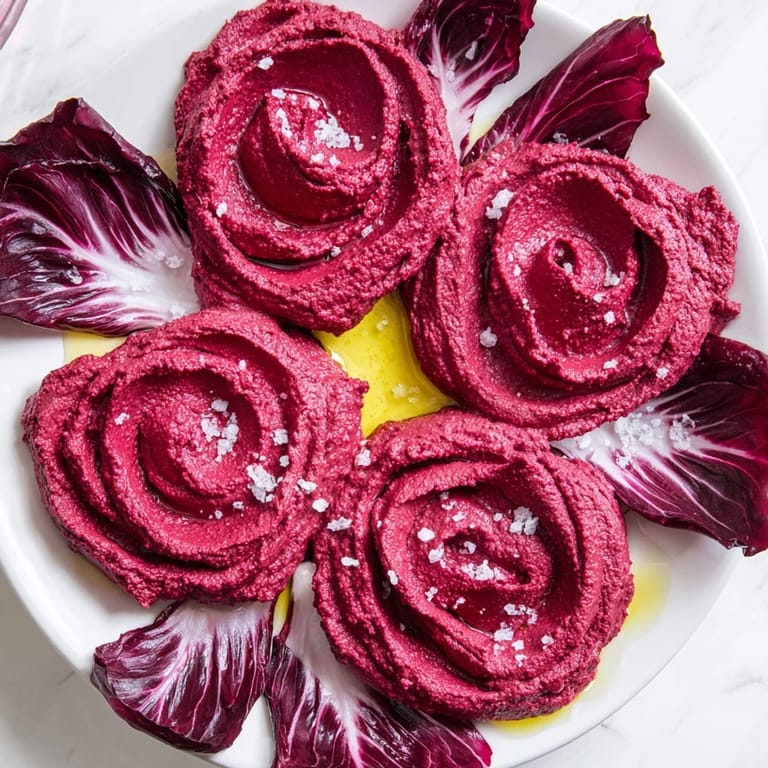
- Either spoon the hummus onto your plate with confident swirls or pipe it with a star tip if you're feeling fancy—both methods work, but the piped version photographs better. Don't overthink it; even imperfect roses look intentional and beautiful.
- Arrange your canvas:
- Tuck radicchio leaves around your hummus roses like petals, creating a natural flower bed that's as functional as it is gorgeous.
- Finish with intention:
- Drizzle with good olive oil, scatter flaky sea salt across the top, and add microgreens if you have them. The salt catches light and adds textural contrast that makes people lean in closer.
- Serve and watch faces light up:
- Put it on the table with extra radicchio leaves for dipping and let everyone discover that this is vegan, this is real food, and yes, it tastes as good as it looks.
 Save
Save The first time someone asked if this was store-bought because it looked too perfect to be homemade, I felt something shift in how I thought about cooking. It wasn't about complicated techniques or rare ingredients—it was about intention and presentation turning simple things into something that made people pause.
The Secret of Deep Color
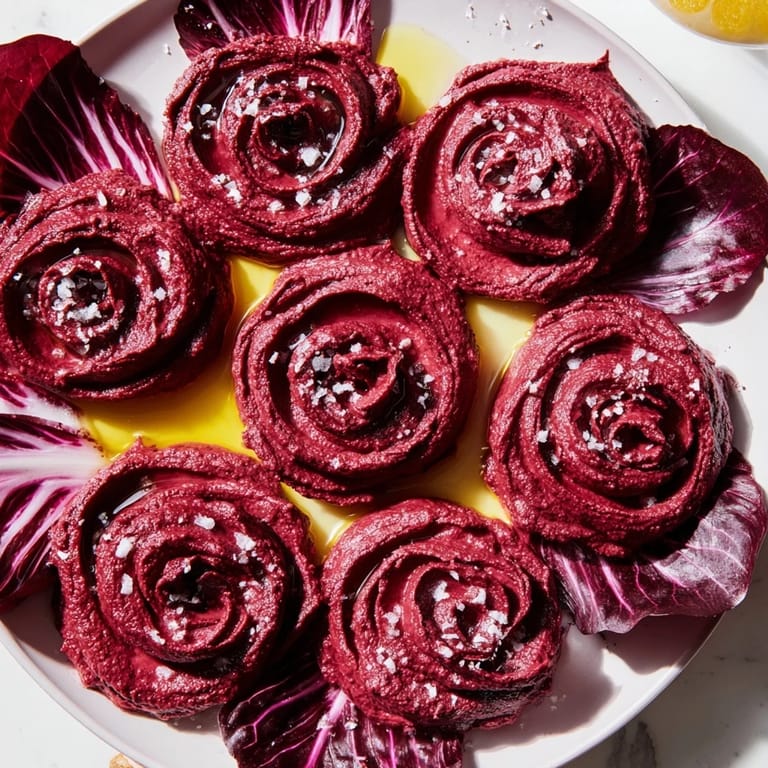
The stunning deep crimson you're seeing isn't food coloring or magic—it's just a beet that's been roasted until it's concentrated all its natural pigments into a tiny package of flavor. When you roast instead of boil, the beet doesn't lose its color to water, and the hummus becomes almost jewel-like, which is why people always assume there's a trick involved. The earthiness deepens too, creating this sophisticated backdrop that makes the tahini's nuttiness shine.
Radicchio as More Than a Plate
I used to think radicchio was just a bitter vegetable that belonged in salads, but when I started using it as a vessel for this hummus, I realized its bitterness was actually perfect counterpoint. Each leaf is sturdy enough to hold a generous scoop without falling apart, and that slight bitterness makes your mouth want more of the sweet, earthy hummus. The leaves are also visually stunning—deep purple-red with white ribs that look like botanical illustrations, which means the presentation does half the work for you.
Making This Your Own
This recipe is flexible in ways that matter and rigid in ways that don't. You can absolutely use endive or Belgian endive instead of radicchio if that's what you have, and pita chips work fine for people who want a crunch element. The one thing I'd never change is the tahini and lemon juice combination—that's what makes the hummus taste like itself instead of like beet mush. If you're feeling experimental, a tiny pinch of smoked paprika adds complexity without announcing itself, and I've also tried a whisper of orange zest on occasion, which creates this unexpected brightness that guests always comment on.
- Make it ahead by a few hours and keep it covered in the fridge; the flavors actually get better as they meld.
- If your piping bag intimidates you, a simple spoon creates perfectly imperfect swirls that look just as intentional.
- The microgreens are optional but worth seeking out if you want the final visual impact to be truly showstopping.
 Save
Save This dish taught me that entertaining doesn't have to be complicated, just intentional. When you put care into how something looks, people taste it differently—and that's real.
Recipe FAQ
- → How do I achieve the rose shape in the hummus?
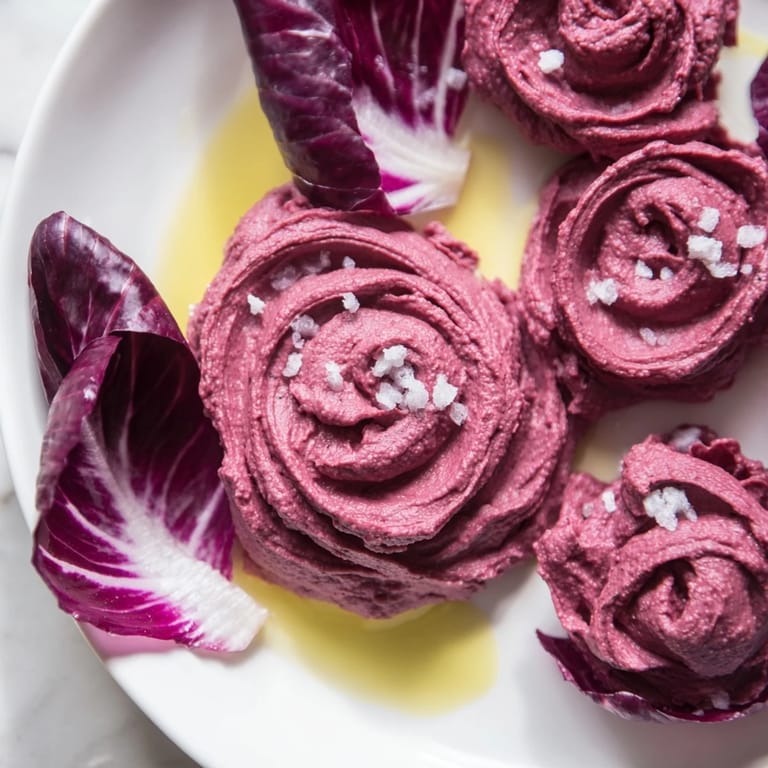
Use a piping bag fitted with a large star tip to pipe the hummus in swirling motions, creating rose-like patterns on the plate.
- → Can I prepare the beet in advance?
Yes, roast the beet ahead of time and refrigerate it. Bring to room temperature before blending for best texture.
- → What can I substitute for radicchio leaves?
Belgian endive or crisp pita chips make excellent alternatives to radicchio for serving alongside the hummus.
- → How can I intensify the flavor?
Add a pinch of smoked paprika to the hummus mixture for a smoky depth that complements the earthy beet.
- → Is this dish suitable for special diets?
Yes, this dish is naturally vegan, gluten-free, and nut-free, containing sesame from tahini as the main allergen.