 Save
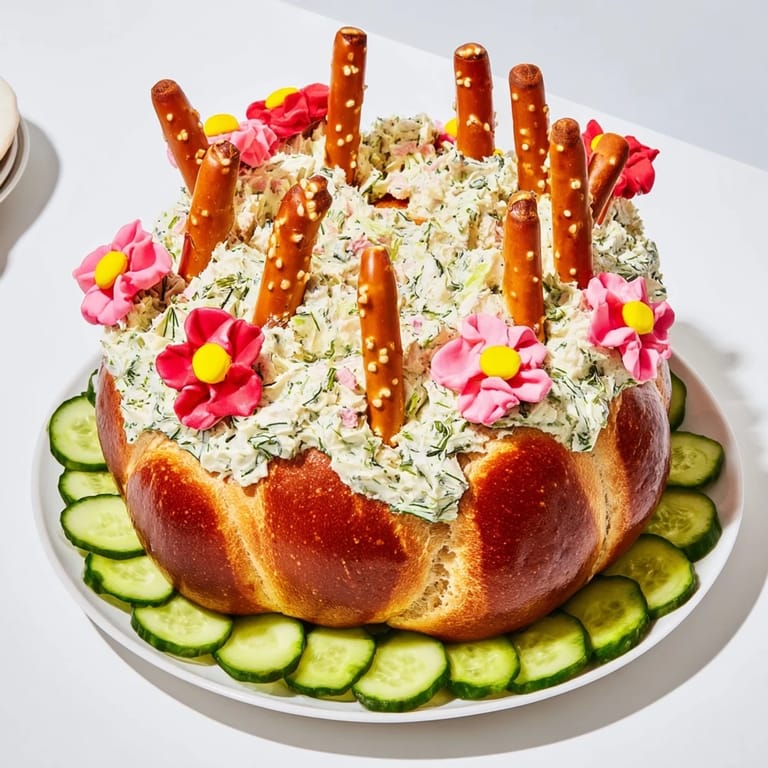
Save I'll never forget the moment I first crafted a Desert Cactus Bloom for a spring gathering. My friend had just returned from Arizona, and I wanted to surprise her with something that captured the wild beauty of the desert she couldn't stop talking about. As I arranged those pretzel spikes into the bread round and dotted it with fruit leather flowers, I realized I wasn't just making food—I was creating a conversation starter, a edible work of art that would make everyone at the table smile the moment they saw it.
The first time I made this, I was nervous. My hands shook a little as I pressed those pretzel sticks into the cream cheese, worried they'd topple over. But then my daughter wandered into the kitchen and gasped—actually gasped—at the sight of it. That moment, watching her face light up, reminded me why I love cooking for people. It's not about perfection; it's about creating something that brings joy before anyone even takes a bite.
Ingredients
- Sturdy loaf of bread (sourdough boule or round rye): This is your foundation—literally. A round loaf gives you that perfect dome shape, and sourdough's structural integrity means your needles won't sink in disappointingly. I've learned to slice a thin base so it sits stable on the platter.
- Herbed cream cheese (or hummus for vegan): This is your edible glue and your flavor anchor. The herbs make it taste intentional, not just functional. Spread it generously; it's what holds your entire vision together.
- Long pretzel sticks (or fresh rosemary sprigs): These are your cactus needles, and they need height to make an impact. If you use rosemary, rinse and dry it thoroughly—wet herbs will wilt and droop, and nobody wants a sad cactus.
- Red or pink fruit leather: This is where the magic happens. The bright color mimics real desert flowers and creates that wow factor. Strawberry and raspberry give the most authentic-looking blooms.
- Yellow fruit leather or dried mango strip: Optional but worth it—these tiny centers make each flower feel complete and intentional, like you spent hours on this instead of twenty minutes.
- Cucumber rounds: These serve as your cactus pads at the base, adding freshness and a visual anchor that grounds the wild arrangement above.
- Fresh herbs for garnish: Parsley or cilantro adds that final touch of life, as if your cactus garden just bloomed.
Tired of Takeout? 🥡
Get 10 meals you can make faster than delivery arrives. Seriously.
One email. No spam. Unsubscribe anytime.
Instructions
- Create Your Stable Foundation:
- Slice a small portion off the bottom of your bread loaf and place it flat-side down on your serving platter. This step is your safety net—a rocking bread base is a recipe disaster waiting to happen. Press it down gently to make sure it's not going anywhere.
- Spread Your Creative Canvas:
- Generously coat the top and sides of the loaf with your herbed cream cheese or hummus. Don't be shy here. This layer is doing triple duty: it tastes good, it looks intentional, and it's the adhesive that holds your entire vision. Work it in with a small knife or offset spatula, making the texture slightly rough so your needles have something to grip.
- Insert Your Cactus Needles:
- Now comes the satisfying part. Push your pretzel sticks or rosemary sprigs vertically into the bread, clustering them in groups like real cactus arms. Vary the heights and angles—nothing in nature is perfectly straight, and your arrangement shouldn't be either. Stand back occasionally and look at it from different angles. You're sculpting here.
- Craft Your Desert Flowers:
- Cut shapes from your fruit leather—circles, simple flowers, whatever feels right. If you have cookie cutters, use them. If not, scissors work beautifully. If you're adding those yellow centers, make sure they're smaller than the main flower shape so they nest inside like the real thing.
- Add Your Blooms:
- Press each fruit leather flower gently onto the tops and sides of your pretzel cactus. The cream cheese or hummus underneath will hold them in place, but you can add a tiny dab of extra cream cheese behind each one if you're nervous. Place them where they'd naturally cluster on a real cactus—near the tips, in little groups, scattered but intentional.
- Ground Your Garden:
- Arrange cucumber rounds around the base in a circle. These aren't just garnish; they're the landscape your cactus lives in. Overlap them slightly, like they're growing together. This is where you'd add fresh herbs too, tucking parsley or cilantro between the cucumbers for a burst of green.
- Present Your Masterpiece:
- Serve immediately as an interactive centerpiece. Invite your guests to break off pieces and explore. The reveal of the creamy interior, the mix of textures—that's the whole experience right there.
 Save
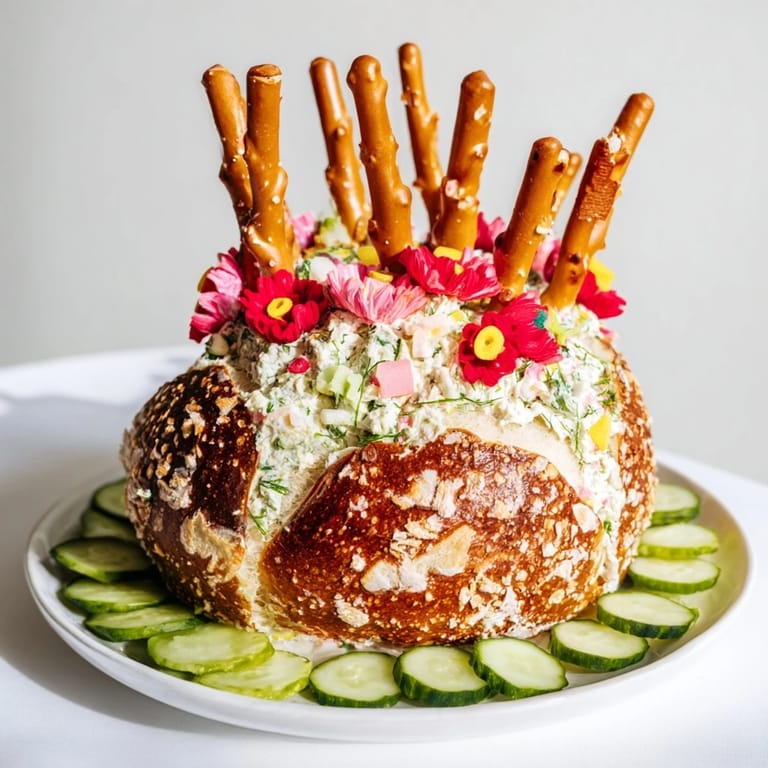
Save My brother brought his girlfriend to dinner the night I first made this, and I watched them notice it before they even sat down. She said, 'Did you actually make that, or did you buy it from an art gallery?' We all laughed, but that's when I understood—when food becomes memorable enough to make people question whether it's even edible, that's when it stops being about hunger and becomes about connection.
Adapting for Your Dietary Needs
This recipe is beautifully flexible, which honestly surprised me when I started experimenting. Swap the cream cheese for vegan cream cheese or hummus, and nobody loses anything—the flavor just shifts gently. Use gluten-free pretzel sticks and bread, and your cactus garden stands just as tall and proud. I've made this for friends with every dietary combination imaginable, and every version was equally stunning and equally loved.
Serving Suggestions and Pairings
The first time I served this, I panicked about what to pair it with. I put out a crisp, citrusy white wine and sparkling lemonade, worried they wouldn't complement the savory and sweet elements. Instead, both were perfect—the wine cuts through the cream cheese richness, and the lemonade echoes the brightness of those fruit leather flowers. Serve with extra dips and sliced veggies on the side to make it a heartier platter, turning it from appetizer into an interactive experience where guests can build their own bites.
The Joy of Edible Centerpieces
There's something about creating food that's also beautiful that changes how people experience a meal. This isn't just an appetizer; it's a conversation starter, a moment of delight before anyone tastes anything. It teaches us that the simplest ingredients—bread, cream cheese, pretzel sticks, fruit leather—can become something that feels like art when you arrange them with intention and a little bit of playfulness.
- Save any leftover fruit leather or cucumber for snacking—they're too good to waste
- This arrangement can be assembled up to 2 hours ahead, but assemble it no more than 4 hours before serving so the bread doesn't dry out
- If you're nervous about the pretzel sticks staying upright, insert them at a very slight angle into the bread rather than perfectly vertical—they're less likely to shift
 Save
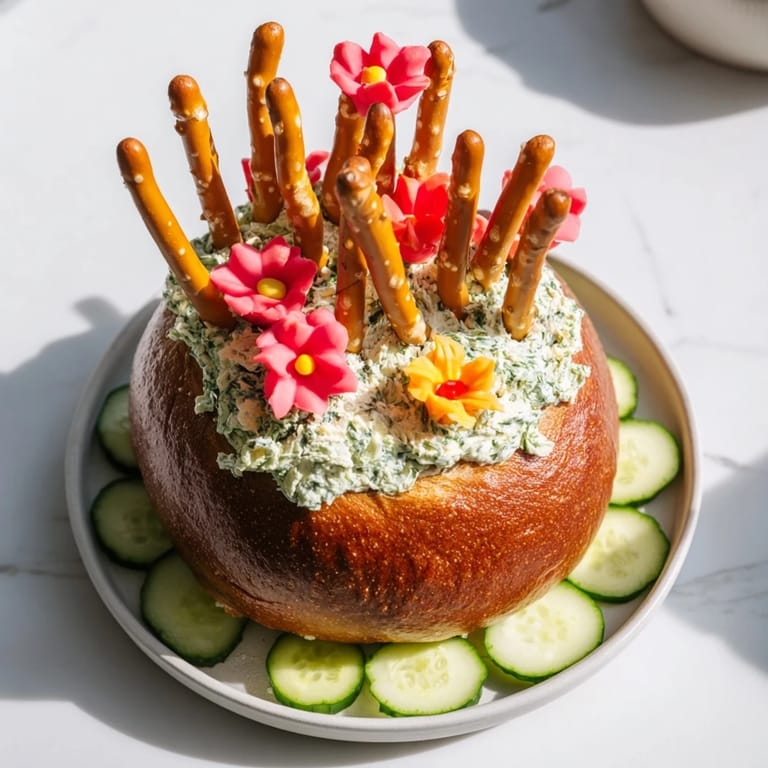
Save Every time I make this now, I think of my friend standing in my kitchen, seeing the cactus bloom for the first time. That's what good food does—it creates moments people remember. I hope this recipe does that for you too.
Recipe FAQ
- → What can I substitute for pretzel sticks?
Fresh rosemary sprigs provide a herbaceous alternative that still mimic cactus needles well.
- → How can I make this gluten-free?
Use gluten-free bread and gluten-free pretzel sticks to keep the arrangement safe for gluten-sensitive guests.
- → Are there vegan options for the creamy spread?
Hummus or vegan cream cheese can replace herbed cream cheese to accommodate vegan diets.
- → How do I create the cactus flowers?
Cut shapes from red or pink fruit leather and add small yellow circles for flower centers to simulate blossoms.
- → What kind of bread works best as base?
A sturdy round loaf like sourdough boule or rye helps support the vertical elements securely.
- → Can this be prepared ahead of time?
For best presentation, assemble shortly before serving to keep pretzels crisp and colors vibrant.